AI SEOスペシャリスト向けプロンプト:ClaudeをオンデマンドのSEOエキスパートとして活用する

ClaudeにSEOブリーフを与えると何が起こるか

指示がなければ、Claudeは人間向けに文章を書き、検索エンジンを無視します。H2構成も、キーワード配置の戦略も、メタデータも、内部リンクのロジックもない、優れた文章を生成します。読みやすくても、検索結果には表示されません。

このガイドのpromptsがその問題を解決します。ClaudeをSEOスペシャリストとして設定する、役割固有のペルソナです。検索意図、キーワードの配置、コンテンツ構造、技術的なオンページ要件を理解します。特定のタスクには個別に使用することも、完全なSEO Specialist Skill Fileを読み込んで恒久的に設定することもできます。

書くだけでなく、Claudeに検索順位を上げさせましょう。キーワードリサーチ、オンページSEO、コンテンツブリーフ向けの、テスト済みのSEO promptパックを入手できます。Claude、ChatGPT、その他のAIチャットに対応しています。
SEO promptsを見る →
このガイドが指すSkill File
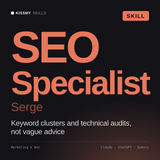
Serge - SEO Specialist AI Skill
$29このSkill $1,500seo agencyを雇う / mo

これは以下のガイドで参照しているSEO Specialist Skill Fileです。ClaudeにSEOのロジックを恒久的に読み込むため、毎回指示しなくても、すべての見出し、アウトライン、商品説明が検索意図に基づいて精査されます。

Serge - SEO Specialistを見る →

役割ベースのAI SEO promptsが汎用的なものを上回る理由

Claudeに「SEOに適したブログ記事を書いて」と頼むことと、構造化されたAI SEOスペシャリスト用promptを使うことの違いは、汎用アシスタントと分野の専門家の違いです。役割ベースのpromptはClaudeに次のことを指示します:

  • 適用するSEOの専門知識レベル(初心者向けか、技術的な深掘りか)
  • タスクで必要となる具体的な成果物(タイトルタグ、H1、H2構成、メタディスクリプション、内部リンクのアンカーテキスト)
  • コンテンツが満たすべき検索意図(情報収集、商用、トランザクション、ナビゲーション)
  • やってはいけないこと(キーワードの詰め込み、内容の薄いコンテンツ、重複したメタディスクリプション)

キーワードリサーチ用AI SEO prompts

1. キーワードクラスター構築ツール

コンテンツ戦略の経験が8年あるSEOスペシャリストとして対応してください。
対象トピック:[TOPIC]。
このトピックを中心に、以下を含むキーワードクラスターを構築してください:
- プライマリキーワード1つ(関連性が最も高く、検索ボリュームが中程度から高いもの)
- セカンダリキーワード5つ(意味的なバリエーション、関連語)
- ロングテールキーワード5つ(質問形式または具体的なユースケース)
- 避けるべきキーワード3つ(誤った検索意図を引き寄せる隣接トピック)
各キーワードについて、検索意図(情報収集/商用/トランザクション)と推定難易度(低/中/高)を示してください。難易度は検索ボリュームだけでなく、競合シグナルに基づいて判断してください。

2. SERPインテント分析

キーワード「[KEYWORD]」の検索意図を分析してください。
次の点を説明してください:これを検索している人は誰か、何を達成しようとしているか、購入者のカスタマージャーニーのどの段階にいる可能性が高いか、また、この検索意図を最も満たすコンテンツ形式(ハウツーガイド、比較ページ、リスト記事、商品ページなど)は何か。
次に、このキーワードをターゲットにしたコンテンツが、質の高い記事であっても検索順位を獲得できない理由を3つ挙げてください。

3. コンテンツギャップの特定

「[KEYWORD]」の上位3件の検索結果にあるH1とH2の構成を貼り付けます:[構成を貼り付け]
3つすべてに含まれている、必ず盛り込むべきトピックや切り口、どれにも含まれておらず自分が獲得できそうな不足要素、コンテンツを差別化して検索者に選ばれる理由を作るための独自の切り口を1つ特定してください。

SEO向けオンページ最適化プロンプト

4. タイトルタグ・メタディスクリプション作成ツール

「[PRIMARY KEYWORD]」をターゲットにするページ向けに、タイトルタグ3案とメタディスクリプション3案を書いてください。
ページのトピック:[簡単な説明]
タイトルタグ:各60文字以内、キーワードを前半に含め、異なる切り口(直接的/好奇心喚起/メリット訴求)にしてください。
メタディスクリプション:各155文字以内、キーワードを自然に含め、明確な価値の提示または暗黙のCTAで終えてください。各案で同じ表現を繰り返さないでください。

5. H2構成オプティマイザー

「[KEYWORD]」をターゲットにしたブログ記事を書いています。
現在のH2構成はこちらです:[H2を貼り付け]
各H2を確認し、(1)汎用的すぎてキーワード順位の向上に役立たないものを指摘し、(2)各H2に自然に盛り込める関連キーワードを提案し、(3)このトピックで検索者がよく抱く疑問を基に、不足しているセクションを推奨し、(4)見出しレベルの構成が論理的か確認してください。

6. 内部リンク監査

このページに内部リンクを追加しています:[ページタイトル/URL]
サイト内の他のページ10件はこちらです:[ページタイトルまたはURLを貼り付け]
内部リンク候補ごとに、アンカーテキスト(「ここをクリック」ではなく説明的なもの)、方向(このページから別ページへ、または別ページからこのページへ)、リンクのSEO上の理由(権威性を渡す/トピックごとにクラスター化する/購入者のカスタマージャーニーを支援する)を提案してください。読者にとって本当に意味のあるリンクだけを提案してください。

7. Schemaマークアップ選定ツール

[ページの内容と目的を説明]するページを作成しています。
このページに最も適したSchema.orgのマークアップタイプを推奨してください。
推奨する各タイプについて、このページに適している理由、入力が必要なデータ項目、期待できるSERP上のメリット(リッチリザルト、FAQボックス、パンくずリストなど)を説明してください。
推奨事項をSEOへの影響度順に出力してください。

コンテンツ執筆用AI SEO Prompts

8. SEOブログ記事概要

「[PRIMARY KEYWORD]」をターゲットにしたブログ記事の完全なSEO概要を作成してください。
対象読者:[DESCRIBE READER]。
含める内容:推奨H1、推奨タイトルタグ(60文字未満)、メタディスクリプション(155文字未満)、各セクションで扱うべき内容を1文で説明したH2セクション6つ、本文全体に自然に配置する意味的キーワード3つ、推奨文字数、コンテンツの切り口(なぜこの記事なのか、なぜ私たちが発信するのか)、内部リンクの機会2つ。

9. 最初の100語の最適化

「[KEYWORD]」をターゲットにした記事の最初の100語です:[PASTE CONTENT]。
評価項目:(1) 最初の段落に主要キーワードが自然に含まれているか? (2) 書き出しで、検索者に自分が正しいページにいると伝えられているか? (3) 読み進める理由があり、スクロールを促せているか? (4) 「In today's world...」や「Have you ever wondered...」のようなよくある書き出しを避けているか?
必要に応じて、同じ長さを保ったまま書き直してください。

SEO Specialist Skill File:常時SEOモード

これらのpromptsは、タスクごとにClaudeをSEOスペシャリストとして設定します。KissMySkillsのSEO Specialist Skill Fileはこれをさらに一歩進め、完全なSEOペルソナをClaudeのシステムpromptに永続的に読み込むため、毎回依頼しなくても、Claudeがコンテンツについて返すすべての回答がすでにSEOロジックを通して調整されます。

見出しを確認するよう依頼すると、Claudeがキーワードの配置をチェックします。ブログ記事の構成を依頼すると、まず検索意図に沿って構成します。商品説明を依頼すると、コンバージョンとクローラーの両方を意識して文章を作成します。

このSkillはKissMySkills.comで利用できます。Claudeに一度追加するだけで、その後のすべての会話で機能します。

コレクションを見る
検索意図を狙うSEO promptパック

キーワードクラスター、タイトルタグ、コンテンツ概要 - 検索順位向上のために作られたSEO promptパック。Claude、ChatGPT、またはあらゆるAIチャットで使えます。

SEO promptsを閲覧 →skillファイルを見る →

よくある質問

Why do role-based AI SEO prompts produce better results than generic ones?+

A generic prompt like 'write an SEO-friendly blog post' gives Claude no domain expertise to apply. A structured role-based SEO prompt tells Claude the level of SEO expertise to apply, what specific outputs the task requires (title tag, H1, H2 structure, meta description, internal link anchors), what search intent the content must satisfy, and what not to do. The difference is between a general-purpose assistant and a domain expert — one produces readable prose that search engines ignore, the other produces content structured for both humans and crawlers from the first draft.

What AI SEO prompts are most useful for keyword research?+

Three prompts cover the keyword research workflow: the Keyword Cluster Builder asks Claude to identify one primary keyword, five secondary semantic variants, five long-tail question-based keywords, and three adjacent keywords to avoid — with search intent and difficulty for each. The SERP Intent Analysis prompt identifies who is searching a keyword, what they are trying to accomplish, what buyer journey stage they are at, and what content format would satisfy the intent — plus three reasons a well-written piece might still fail to rank. The Content Gap Identification prompt compares the H2 structures of the top three results for a keyword and identifies topics all competitors cover, gaps none of them address, and one unique angle to differentiate the content.

What AI SEO prompts are most useful for on-page optimisation?+

Four prompts cover on-page work: the Title Tag and Meta Description Writer produces three title tag options under 60 characters each with different angles and three meta description options under 155 characters. The H2 Structure Optimizer reviews an existing outline, flags generic headings, suggests supporting keywords per section, and identifies missing sections based on common searcher questions. The Internal Linking Audit suggests anchor text, link direction, and SEO rationale for potential internal links between specified pages. The Schema Markup Selector recommends the most appropriate Schema.org types for a page, explains why each fits, lists required data fields, and ranks recommendations by SEO impact.

How should Claude be used to optimise the opening of a blog post for SEO?+

Paste the first 100 words of the article into Claude along with the target keyword and ask it to evaluate four things: whether the primary keyword appears naturally in the first paragraph; whether the opening confirms to the searcher they are in the right place; whether it earns the scroll by giving a reason to keep reading; and whether it avoids common weak openers like 'In today's world' or 'Have you ever wondered.' Claude then rewrites the opening at the same length if any of these criteria are not met. This single optimisation consistently improves both rankings and bounce rate by ensuring the page immediately satisfies search intent.

What is the difference between using individual AI SEO prompts and loading an SEO Specialist Skill File?+

Individual AI SEO prompts configure Claude as an SEO specialist one task at a time — each prompt must be entered fresh and the context does not carry between sessions. An SEO Specialist Skill File loaded into Claude's system prompt makes SEO logic permanent and automatic across every conversation. Ask Claude to review a headline and it checks for keyword placement without being asked. Ask for a blog post outline and it structures for search intent first. Ask for a product description and it writes for both conversion and crawlers simultaneously. The skill file eliminates the need to re-establish SEO context on every task, making every Claude interaction SEO-aware by default.

~/get-started

役立つSkills。無駄なし。

ストア内のすべてのスキル、promptパック、agentを閲覧する。

すべてのスキルを見る →または無料ツールを試す