Un marketplace di prompts AI vende come prodotto istruzioni testate di qualcun altro: pagate una volta, scaricate un file di testo e lo caricate in Claude, ChatGPT o Gemini. Vale la pena pagare quando il prompt codifica un lavoro che non sapete svolgere da soli - i framework di un copywriter, la checklist di chiusura di un controller. Non vale la pena pagare per qualcosa che potreste scrivere in dieci minuti.
Prezzi e dettagli di terze parti verificati ad agosto 2026. I prezzi dei venditori cambiano - confermate sul sito del venditore prima di acquistare.
Che cosa state davvero acquistando?
Un file di testo. Questo è l'intero prodotto. Non c'è alcuna app a cui accedere, nessuna licenza utente da assegnare, nulla che si aggiorni da solo. Le inserzioni si presentano in quattro forme:
- Un singolo prompt - un blocco di istruzioni per una sola attività. È il formato più comune nei marketplace di generazione di immagini.
- Un pacchetto di prompts - un insieme di prompts correlati che coprono un flusso di lavoro, con note su quando usare ciascuno. KissMySkills ne vende 300+ a 9 $.
-
Un file di competenze - un documento
SKILL.mdche Claude carica una volta e applica a ogni conversazione, invece di doverlo incollare di nuovo per ogni attività. KissMySkills ne offre oltre 1.000 a 19 $. - Un agent - un file di competenze più i file di supporto e il processo necessari per svolgere un lavoro in più fasi dall'inizio alla fine. 55 nel catalogo a 39 $.
Acquistare un prompt è davvero meglio che scriverne uno proprio?
A volte. La distinzione onesta:
Acquistatelo quando il prompt contiene conoscenze che non possedete. Un pacchetto di copywriting vale 9 $ perché codifica framework - problem-agitate-solve, ordine delle obiezioni, posizione delle prove - che dovreste imparare prima ancora di poter scrivere il prompt. La stessa logica vale per una guida al DCF o per una sequenza di chiusura contabile di fine mese.
Scrivete il vostro quando il compito è specifico per la vostra azienda. Nessuno vende un prompt che conosca i vostri scaglioni di prezzo, il vostro elenco clienti o il vostro tono. Un pacchetto acquistato fornisce la struttura; i fatti dovete fornirli voi.
Chiunque vi indichi un numero preciso di ore risparmiate sta facendo un'ipotesi: quella cifra dipende interamente da quanto siete già bravi a scrivere prompts. Quello che si può verificare è il prezzo. Un pacchetto da 9 $ costa meno di un'ora del tempo di quasi chiunque, motivo per cui la decisione è solitamente facile anche quando il risparmio si rivela modesto.
Quali sono i diversi tipi di marketplace?
Marketplace generalisti
PromptBase e PromptHero elencano prompts per qualsiasi modello - ChatGPT, Midjourney, DALL·E, Stable Diffusion, Claude. Entrambi erano ancora operativi quando abbiamo verificato nell'agosto 2026. L'ampiezza è il punto di forza. Il limite è il mix: i cataloghi sono fortemente orientati alla generazione di immagini, quindi i prompts per attività aziendali e flussi di lavoro rappresentano una piccola parte di un indice molto ampio. Gran parte di PromptHero è consultabile gratuitamente, il che lo rende utile per studiare come formulano le richieste gli altri, anche se non acquisti nulla.
Marketplace specifici per ruolo
Più specializzati per definizione: una sola famiglia di modelli, indicizzati per professione anziché per tipo di prompt. KissMySkills si colloca qui - file di Skill per Claude e pacchetti di prompts organizzati per ruolo, con garanzia di rimborso entro 30 giorni. Rinunci all'ampiezza del catalogo in cambio della possibilità di trovare ciò che corrisponde al tuo lavoro in meno di un minuto.
Raccolte gratuite della community
Repository GitHub, pagine Notion condivise, wiki di subreddit. Nessun costo, nessuna selezione e nessun modo per sapere quali voci siano state testate l'ultima volta con un modello aggiornato. Utili per vedere come è strutturato un prompt. Rischiosi da usare senza aver prima letto ogni riga.

Ecco come si presenta in pratica un pacchetto specifico per un ruolo: applica framework di copywriting specifici alla tua offerta invece di generare contenuti generici prodotti dall'AI. Questa differenza di specificità è l'argomento principale a favore dei marketplace specializzati rispetto a quelli generalisti.
Visualizza lo strumento di copywriting AI →Come si verifica un pacchetto prima di pagare?
- È indicato un modello? Claude, GPT e Gemini rispondono in modo diverso alle stesse istruzioni. "Funziona con qualsiasi AI" di solito significa che non è stato ottimizzato per nessuno di loro.
- Produce risultati concreti? Uno screenshot di ciò che ha prodotto il prompt vale più di tre paragrafi che descrivono cosa produce.
- Quando è stato aggiornato l'ultima volta? Le versioni dei modelli rendono silenziosamente obsoleti i prompts. Un file non aggiornato durante due importanti rilasci è una scommessa.
- È previsto un rimborso? Non puoi testare un file di testo prima di acquistarlo, quindi il periodo di rimborso è l'unica prova che hai. KissMySkills offre 30 giorni. Controlla cosa offre ogni venditore, perché molti non offrono nulla.

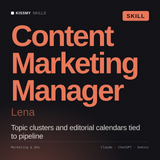
Un file skill anziché un elenco di prompt: Lena gestisce calendari, brief e distribuzione come un unico sistema che carichi una volta, invece di quattro prompt che incolli separatamente e devi continuare a spiegare da capo.
Visualizza Lena →Come installi ciò che hai acquistato?
Per un file skill di Claude esiste un solo percorso supportato:
- Verifica che il download sia uno ZIP con
SKILL.mdalla radice dell'archivio, non nascosto in una cartella annidata. È il motivo più comune per cui un caricamento fallisce. - Nell'app desktop di Claude, apri Personalizza → Skills e carica lo ZIP.
- Attiva la skill. Da quel momento Claude la applicherà senza che tu debba incollare di nuovo nulla.
Questo percorso nativo richiede l'esecuzione del codice abilitata in Impostazioni e poi in Funzionalità, disponibile su tutti i piani, incluso Free. Con un piano gratuito, oppure in ChatGPT o Gemini, l'alternativa è aprire il SKILL.md file, copiane il contenuto e incollalo nelle istruzioni personalizzate. Le istruzioni funzionano allo stesso modo; perdi soltanto l'interruttore e devi aggiungerle di nuovo per ogni progetto.
Dove mostrano i loro limiti i marketplace di prompt?
Le parti che non arrivano alla landing page:
- I prompt si deteriorano silenziosamente. Quando viene rilasciato un nuovo modello, un prompt che faceva affidamento sulle abitudini di quello precedente si degrada senza alcun messaggio di errore. Te ne accorgi perché l'output è peggiorato, non perché qualcuno ti abbia avvisato.
- Compri alla cieca. Non esiste una prova per un file di testo. La politica di rimborso è l'unica garanzia e, nei grandi marketplace aperti, spesso non ce n'è una.
- La maggior parte delle inserzioni non vende mai. In un marketplace con centinaia di migliaia di inserzioni, il collo di bottiglia è la scoperta, non l'offerta. Se pensi di vendere, parti dal presupposto che nessuno si imbatterà per caso in te.
- Un prompt non può fornire giudizio. Una skill da CFO strutturerà una narrazione per il consiglio di amministrazione; non saprà che il tuo picco di churn è dovuto all'abbandono di un cliente enterprise. Input scadenti producono comunque output sicuri di sé e sbagliati.
- I prompt per immagini dominano i cataloghi generici. Se vuoi prompt per i flussi di lavoro aziendali, gran parte di ciò che indicizza un marketplace generico è irrilevante per i tuoi scopi.
Come vendi prompt che hai già scritto?
- Inizia da ciò che usi ogni giorno. I prompt già presenti nella cronologia delle tue chat sono il prodotto. Trascrivili correttamente, includendo il contesto che ora fornisci a memoria ogni volta.
- Restringi più di quanto sembri sensato. "Prompt di marketing" compete con migliaia di inserzioni. "Prompt di Claude per responsabili della generazione della domanda nel SaaS B2B" compete con quasi nessuno e raggiunge qualcuno che pagherà davvero.
- Fai eseguire i prompt a freddo a una persona estranea. I tuoi prompt funzionano in parte perché colmi istintivamente le lacune. Osserva qualcuno al di fuori del tuo ruolo alle prese con quelle lacune e annota dove si blocca.
- Calcola il prezzo in base a ciò che sostituisce, non al tuo impegno. Gli acquirenti confrontano una raccolta con l'alternativa - un'ora di lavoro di un freelance, un pomeriggio del proprio tempo - non con le settimane che hai impiegato per crearla.
- Conosci la commissione prima di stabilire il prezzo. PromptBase trattiene il 20% sulle vendite nel Marketplace e lo 0% quando un acquirente arriva tramite il tuo link (promptbase.com/sell, verificato ad agosto 2026). I termini cambiano; leggi la pagina di vendita aggiornata prima di stabilire il prezzo.

La strategia di confezionamento applicata agli Agents: cinque Agents aziendali specializzati venduti come un'unica soluzione, così un team utilizza gli stessi file invece di disperdere prompt singoli nelle chat individuali.
Visualizza il pacchetto Business Agent →In sintesi:
Per svolgere bene una singola attività, basta una raccolta come lo strumento di copywriting AI a 9 $. Per standardizzare un flusso di lavoro ricorrente, un file Skills come Lena - Content Marketing Manager a 19 $ si carica una volta e rimane attivo. Per un intero team, il pacchetto Business Agent costa 99 $. Sono tutti acquisti una tantum, funzionano con Claude, ChatGPT e qualsiasi chat AI senza bisogno di programmare e includono una garanzia soddisfatti o rimborsati di 30 giorni.
Oltre 1.000 file Skills per Claude a 19 $, 300+ raccolte di prompt a 9 $ e 100+ Agents a 39 $ - tutto organizzato per funzione lavorativa anziché per tipo di prompt. Funziona con Claude, ChatGPT o qualsiasi chat AI.
Sfoglia tutti i prompt →Scopri i file Skills →