AI Recruiting Agents:採用活動をソーシングからオンボーディングまで自動化しましょう

AI Recruiting Agents: Automate Your Hiring from Sourcing to Onboarding | KissMySkills

なぜ採用はAI agentに適しているのか

採用はどの組織においても最もプロセス集約的な機能の一つであり、最も方法論に依存する分野の一つです。悪い採用プロセスは一貫性のない採用判断を生みます。一貫性のない面接プロセスはバイアスをもたらします。文書化されていないオンボーディングプロセスは早期離職率を高めます。その影響は連鎖的に拡大します。多くのHR調査によると、20人規模の会社での悪い採用は、その役職の年収の半分から2倍のコストがかかると言われています。

AI採用agentが効果的なのは、採用タスクが定義された方法論と明確なアウトプットに従うためです。ソーシング戦略の構築、構造化された面接プロセスの設計、求人オファーの作成、30/60/90日間のオンボーディングプランの作成など、それぞれにベストプラクティスがあり、agentはこれをすべての採用に体系的に適用できます。時間がある場合だけでなく、すべての採用に対してです。

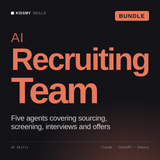
ソーシングから90日目までの採用を自動化。戦略、スクリーニング、面接、オファー、オンボーディングの5つの専門agent。
AI Recruiting Agentsを閲覧 →

採用AI agentがカバーする5つのステージ

採用戦略。求人を出す前や候補者を探す前に、戦略が正しくなければなりません:どのチャネルがこの候補者タイプに実際に届くのか、採用プロセスはどうあるべきか、役割と市場を踏まえた現実的な採用タイムラインは何か。採用戦略agentは役割、会社のステージ、チーム構成、現在のアプローチを尋ね、ソーシングチャネルの優先順位、プロセス設計、週ごとの採用タイムラインを含む完全な戦略を提供します。多くの採用マネージャーはこの段階を完全に飛ばし、なぜ役割の充足に4ヶ月もかかるのか疑問に思っています。

候補者スクリーニング。履歴書のスクリーニングは採用で最も量が多く、時間がかかる部分であり、最も一貫性を欠きやすい部分です。スクリーナーごとに基準が異なり、スピードが求められる市場では時間的プレッシャーの中で判断が下されます。候補者スクリーニングagentは、応募書類を一つも見る前に必須条件と望ましい条件を確立し、各候補者に対して具体的な理由を添えた進行/保留/辞退の構造化された判断を提供します。量や時間のプレッシャーに関わらず、すべての応募に一貫した方法論を適用します。

面接設計。非構造化面接は最も予測力の低い採用評価であり、ほとんどの面接は非構造化です。面接設計agentは能力ごとに構造化された質問セットを作成し、各質問に対して強い、十分な、弱い回答の基準を定めた評価ルーブリックを用意します。すべての面接官は面接開始前に何を評価するかを理解しています。面接後の判断は、異なる会話間での直感比較ではなく、定義された基準に基づく証拠に基づいて行われます。

求人オファーと交渉。不適切に提示されたりタイミングが悪いオファーは、適切に扱われたオファーなら受け入れたであろう候補者を失います。求人オファーagentは電話での口頭オファースクリプトを設計し、給与額ではなく総報酬を魅力的にまとめた正式なオファーレターを作成し、明確な撤退ラインと給与以外の交渉手段を含む交渉戦略を構築し、この役割とレベルで最も起こりうるシナリオに対するカウンターオファー対応も準備します。

オンボーディング。早期離職の大半は最初の90日間に起こり、その多くは防げます。オンボーディングの不備が主な原因です。オンボーディングagentは、オファー受諾から入社日までの事前コミュニケーション、意図的な早期成功を組み込んだ初週の1日ごとのスケジュール、活動ではなく成果に基づく30/60/90日プラン、HR、採用マネージャー、新入社員それぞれのための別々のチェックリストを含む完全なプログラムを作成します。

agentなしの採用プロセスとagentありの採用プロセスの違い

AI採用agentがない場合、典型的な採用プロセスはこうなります:求人票は以前のバージョンから流用されます。スクリーニング基準は口頭で合意され、履歴書を確認する人ごとに異なって適用されます。面接は構造化された質問ガイドなしで予約されます。オファーは標準テンプレートで送られます。オンボーディングは初日にITセットアップと書類の山から始まります。

AI採用agentがある場合、同じプロセスはこうなります:求人を出す前に採用戦略が使用チャネルと現実的なタイムラインを定義します。履歴書を一つも見る前にスクリーニング基準が文書化されます。面接官は評価ルーブリック付きの構造化質問ガイドを受け取ります。オファーはスクリプト化された会話で伝えられ、その後魅力的なレターが送られます。オンボーディングは入社2週間前から始まり、構造化された90日間の成果プランに従います。

違いはAI対人間の判断ではありません。違いは、誰かに時間がある時だけ適用される方法論と、一貫して適用される方法論の違いです。

AI採用agentが代替しないもの

AI採用agentは採用の中心にある人間の判断を代替しません。どの候補者を採用するかを教えません。面接を行いません。候補者が競合オファーよりあなたの会社を選ぶ関係性を築きません。

代替するのは方法論のギャップです—プロセスが守られた採用とそうでない採用の間の一貫性の欠如を埋めます。準備、文書化、構造化された思考を担当し、採用プロセスにおける人間の時間を管理業務ではなく評価と判断に集中させます。

誰がAI採用agentを使うのか

正式な採用プロセスを経験したことがなく、間違いが許されない最初の5人の採用を行う創業者。20〜200人規模の会社で、すべての採用が重要であり、各ステージに専門家を置くほどチームが大きくないHRマネージャー。大量採用を管理する採用チーム—新卒採用、季節的な役割、急速な拡大—で、すべての役割に一貫したプロセスとアウトプットが必要な場合。

共通点は、良い採用がどうあるべきかを知っているが、すべての採用にベストプラクティスの方法論を毎回サポートなしで適用する時間や専門的な深さがないプロフェッショナルであることです。

KissMySkills AI Recruiting Agentsコレクション

KissMySkillsは採用パイプライン全体をカバーする5つのAI採用agentを提供しています:Frank(採用戦略)、Alice(候補者スクリーニング)、Peter(面接設計)、Laura(求人オファーと交渉)、Simon(オンボーディング)。これらは役割定義から90日目までのすべてのステージをカバーします。Claude、ChatGPT、またはシステムpromptsを受け入れる任意のAIチャットで動作します。HRソフトウェアとの統合は不要で、agentが戦略と文書を作成し、既存のプロセスで適用します。

コレクションを探る
AI Recruiting Agents — 5つの専門agent

Frank、Alice、Peter、Laura、Simonが採用戦略、候補者スクリーニング、面接設計、求人オファー、オンボーディングをカバー。各49ドル、必要なものだけ購入可能。

Frequently Asked Questions

Why is recruiting well-suited to AI agents?

Recruiting is process-intensive and methodology-dependent. A bad recruiting process produces inconsistent hiring decisions and introduces bias, with consequences that compound — a bad hire in a 20-person company costs between half and twice the annual salary according to HR research. AI recruiting agents are effective because recruiting tasks follow defined methodologies with defined outputs. Building a sourcing strategy, designing structured interviews, writing job offers, creating onboarding plans — each has a best-practice approach agents can apply systematically to every hire, not just the ones where someone had time to do it properly.

What stages of the hiring process can AI recruiting agents handle?

AI recruiting agents cover five stages: recruiting strategy with sourcing channel priorities, process design, and week-by-week hiring timeline; candidate screening with structured advance/hold/decline decisions and specific reasoning for each candidate; interview design with structured question sets, scoring rubrics, and competency-based assessments; job offers and negotiation with verbal offer scripts, formal offer letters, and counter-offer response strategies; and onboarding with pre-boarding communications, day-by-day first week schedules, and 30/60/90-day outcome plans.

What's the difference between hiring with and without AI recruiting agents?

Without agents: job descriptions copied from previous versions, screening criteria agreed verbally and applied differently by each reviewer, interviews booked with no structured question guide, offers sent as standard templates, onboarding starts on day one with IT setup. With agents: recruiting strategy defines channels and timeline before posting, screening criteria documented before reviewing CVs, interviewers receive structured question guides with scoring rubrics, offers delivered via scripted conversations with compelling letters, onboarding begins two weeks before start date with a structured 90-day plan. The difference is methodology applied consistently versus applied when someone had time.

What do AI recruiting agents NOT replace in the hiring process?

AI recruiting agents do not replace the human decisions at the centre of hiring. They don't tell you which candidate to hire, don't conduct interviews, and don't build the relationship with a candidate that makes them choose your company over a competing offer. What they replace is the methodology gap — the inconsistency between hires where process was followed and hires where it wasn't. They handle the preparation, documentation, and structured thinking so human time focuses on assessment and decisions, not administration.

Who should use AI recruiting agents?

Founders making their first five hires who have never run a formal recruiting process and cannot afford to get it wrong, HR managers in companies of 20-200 people where every hire matters and the team is too small to have a specialist for each stage, and recruiting teams managing high-volume hiring like graduate intake or rapid scaling who need consistent process across every role simultaneously. The common thread: professionals who know what good hiring looks like but don't have the time or specialist depth to apply best-practice methodology to every hire without support.

よくある質問

~/get-started

Skills that work. No fluff.

Browse every skill, prompt pack, and agent in the store.

Browse all skills →Or start with free skills