Un prompt système est une instruction permanente qui définit le comportement d’une AI pendant toute une conversation — son rôle, son ton, ses règles et son format de sortie. Pour en rédiger un qui fonctionne, couvrez trois couches : qui est l’AI (personnalité), comment elle fonctionne (règles) et avec quoi elle travaille actuellement (contexte). Soyez précis, restez concis et testez-le sur une tâche réelle. Voici la version pratique, avec des exemples.

19 $ en une seule fois
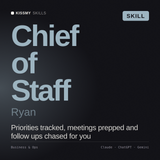
Une compétence de persona est un prompt système rédigé par des professionnels, que vous pouvez étudier et réutiliser. Ryan définit le rôle, la méthode et les garde-fous d’un chef de cabinet — ouvrez-le pour voir exactement comment est structuré un prompt système solide.
Voir la compétence →Ce que fait réellement un prompt système
Chaque réponse de l’AI est façonnée par deux éléments : le message que vous venez de saisir et un ensemble d’instructions générales qui persistent pendant toute la conversation. Ces instructions générales constituent le prompt système. Dans ChatGPT, il se trouve dans les instructions personnalisées ; dans Claude, ce sont les instructions de compétence ou de projet ; dans un appel API, c’est le système champ. Faites-le correctement et vous cesserez de vous répéter — l’AI assume le rôle à votre place.
Les trois couches d’un bon prompt système
1. Personnalité — qui est l’AI
Définissez le rôle, l’expertise, le ton et les limites. Pas « être utile » — c’est trop vague pour changer quoi que ce soit. Préférez : « Vous êtes un analyste financier senior. Vous êtes précis, vous montrez votre raisonnement et vous signalez les hypothèses au lieu de les dissimuler. » Cette couche change rarement.
2. Règles — comment il fonctionne
Détaillez le flux de travail, les contraintes et le format de sortie. Indiquez quoi faire et quoi éviter, et soyez explicite quant au format : « Répondez toujours en trois parties : résumé, détails, prochaine étape. N’inventez jamais de chiffres ; si des données manquent, dites-le. » Cette couche évolue à mesure que vous découvrez ce qui fonctionne.
3. Contexte — avec quoi il travaille
Donnez la situation : qui est l’utilisateur, quel est l’objectif et quels sont les faits pertinents. C’est la couche qui change selon la conversation, et il est souvent préférable de la fournir dans le message de l’utilisateur ou dans un fichier joint plutôt que de l’intégrer au prompt système.
Un exemple détaillé
Voici un prompt système compact qui utilise ces trois niveaux :
« Vous êtes un rédacteur expérimenté d'e-mails pour une entreprise de logiciels B2B (rôle). Rédigez dans un langage simple et assuré ; n'utilisez pas de termes sensationnalistes comme « révolutionnaire » (règles). Chaque e-mail doit comporter un seul appel à l'action clair et faire moins de 120 mots (règles). Affichez l'objet, puis le corps du message (format). Demandez-moi quelle est l'audience et quelle est l'offre avant de rédiger si je ne vous les ai pas fournies (règles). »
Remarquez ce qu'il ne fait pas : il ne dit pas « soyez créatif » ni « faites de votre mieux ». Chaque ligne modifie le résultat.
Cinq erreurs qui ruinent discrètement les prompts système
Adjectifs vagues. « Professionnel », « engageant » et « utile » ne signifient rien de mesurable - remplacez-les par des comportements précis. Aucun format de sortie. Si vous ne précisez pas la structure, vous obtenez une forme différente à chaque fois. Trop long. Les prompts surchargés noient les règles importantes ; supprimez tout ce qui n'est pas indispensable. Jamais testé. Vous ne pouvez pas évaluer un prompt système en le lisant - confiez-lui une vraie tâche et observez ce qui ne va pas dans le résultat. Contradictions. « Soyez concis » et « expliquez tout en détail » s'annulent ; vérifiez qu'aucune règle n'entre en conflit avec une autre.
Le raccourci : partez d'un prompt qui fonctionne
Rédiger un prompt système efficace à partir d'une page blanche est une véritable compétence. La méthode la plus rapide consiste à partir d'un prompt éprouvé et à l'adapter. C'est exactement ce que sont nos Skills de persona : des prompts système complets et rédigés par des professionnels pour des rôles spécifiques, que vous pouvez ouvrir, étudier et adapter. Pour en savoir plus sur la création de prompts, consultez comment rédiger de meilleurs prompts AI et notre bibliothèque d'exemples et modèles de prompts AI.
19 $ en une seule fois
Si rédiger un prompt système complet vous semble être un projet, partez d’un prompt qui fonctionne déjà. Ryan est un rôle complet - caractère, guide pratique et règles de sortie - prêt à être collé dans Claude, ChatGPT ou Gemini.
Obtenir Ryan →Questions fréquemment posées
Qu’est-ce qu’un prompt système ?
Un prompt système est une instruction permanente qui indique à une AI qui elle est et comment se comporter pendant toute une conversation - son rôle, son ton, ses règles et son format de sortie. Contrairement à un message normal, qui demande une seule chose, le prompt système façonne chaque réponse jusqu’à ce que vous le modifiiez.
Quelle est la différence entre un prompt système et un prompt utilisateur ?
Le prompt système définit la persona et les règles une fois pour toutes ; le prompt utilisateur correspond à la tâche précise que vous saisissez à chaque fois. Considérez le prompt système comme la fiche de poste et le prompt utilisateur comme la mission du jour.
Quelle doit être la longueur d’un prompt système ?
Aussi court que possible tout en couvrant le rôle, les règles et le format de sortie. Une bonne règle empirique : s’il tient sur une page, gardez-le entièrement dans le prompt système. S’il dépasse une page, divisez-le - les instructions essentielles dans le prompt, la documentation de référence dans des fichiers joints.
Puis-je réutiliser le même prompt système avec ChatGPT, Claude et Gemini ?
Dans la plupart des cas, oui. La structure - rôle, règles, format de sortie, exemples - se transfère d’un modèle à l’autre avec quelques modifications mineures. C’est pourquoi une compétence de persona bien conçue fonctionne aussi bien lorsque vous la collez dans les Skills de Claude, les instructions personnalisées de ChatGPT ou Gemini. Consultez ce que sont les Skills de Claude.
En bref
Un prompt système définit le rôle de l’AI, ses règles et le format de sortie pour toute la conversation. Définissez le caractère, les règles et le contexte ; soyez précis ; restez concis ; puis testez-le sur une tâche réelle. Pour éviter la page blanche, partez d’une compétence de persona prête à l’emploi sur le marché des Skills, ou améliorez un brouillon avec l’optimiseur de prompt gratuit.