Agentic AI is AI that pursues a goal across multiple steps on its own - planning, using tools, and finishing the work instead of just answering a question. The clearest way to understand it is through real examples. Below are eight ways businesses actually use AI agents in 2026, across sales, marketing, finance, SEO, recruiting and operations - plus the fastest way to put one to work without building anything.

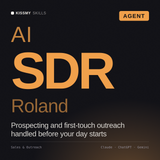
Outbound prospecting is the classic agentic job: research a lead, personalize the message, follow up. Roland runs that whole sequence on Claude - the role and workflow are already written for you.
View Roland →What is agentic AI?
Agentic AI describes AI systems that act, not just answer. Give an agent a goal - "find and reach out to ten qualified leads" - and it plans the steps, uses tools like web search and files, checks its own progress, and returns a finished result with little human input in between. A chatbot helps you do a task; an agent does the task. For a deeper breakdown of the categories, see our guide on AI agents vs skills vs prompts.
8 agentic AI examples businesses use in 2026
1. Sales outreach (SDR agents)
An agent researches a prospect, writes a personalized first message, sends follow-ups, and logs replies - running an outbound cadence that used to need a junior rep. This is the most common commercial use of agentic AI, and the easiest to measure in booked meetings.
2. Lead generation and qualification
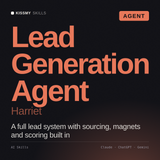
Agents scan for companies matching your ideal-customer profile, enrich the list with contact and firmographic data, and score which leads are worth pursuing - turning hours of manual list-building into a repeatable task.
3. Bookkeeping and finance
Finance agents categorize transactions, reconcile accounts, flag anomalies, and draft cash-flow or budget summaries. They do not replace an accountant for sign-off, but they remove the repetitive data work that fills the week.
4. SEO and content operations
An SEO agent runs keyword research, clusters topics, audits pages against best practices, and drafts briefs - chaining the steps a specialist would take. Pair it with a content agent and you have a small pipeline. See how to use AI agents for SEO.
5. Recruiting and candidate screening
Recruiting agents parse applications against a role, screen for must-have criteria, draft interview questions, and prepare offer letters - compressing the top of the hiring funnel while a human makes the final call.
6. Customer support triage
Support agents read incoming tickets, draft accurate replies from your help docs, tag and route issues, and escalate the ones that need a person - cutting response times without dropping the human safety net.
7. Project and operations management
An operations agent turns a messy brief into a structured plan with owners, milestones and risks, then keeps status updated - the coordination work that usually lives in someone's head.
8. Executive and admin assistance
An assistant agent triages your inbox, drafts replies, prepares meeting notes and manages your to-do list - the everyday admin that quietly eats hours. This is often the first agent people adopt because the payoff is immediate.

Example #4 in action: hand Walter a topic and it runs the keyword-research workflow - clusters, intent, and priorities - on Claude, no prompt engineering required.
View Walter →How to start with agentic AI
You do not need to build an agent to use one. Match the agent to your biggest recurring job and start there:
- Sales: AI Sales Agents - e.g. Roland for outbound or Harriet for lead gen.
- SEO: AI SEO Agents - e.g. Walter for keyword research.
- Finance: AI Finance Agents - e.g. Greta for bookkeeping.
- Recruiting: AI Recruiting Agents - e.g. Alice for screening.
- Operations: AI Business Agents - e.g. William for admin or Paul for projects.
If you would rather understand the mechanics first, our beginner's guide to building an AI agent walks through the parts, and the best AI agents in 2026 roundup compares the platforms.
Want to see agentic AI pay off fast? Outbound is the clearest win. Roland runs the research-personalize-follow-up sequence on Claude with no setup. Browse every role in the agents catalog or try a free generator first.
Get Roland - $39 →Frequently asked questions
What is an example of agentic AI?
A common example is an AI sales development agent: give it a target account and it researches the company, writes a personalized outreach message, sends follow-ups, and logs the replies - completing a multi-step job on its own. Other examples include bookkeeping agents, SEO agents, recruiting-screening agents and executive-assistant agents.
What is the difference between agentic AI and a chatbot?
A chatbot answers one prompt at a time and waits for your next instruction. Agentic AI takes a goal and completes the steps to reach it - planning, using tools, and iterating - with little input in between. The difference is helping you do a task versus doing the task for you.
Is agentic AI safe for business use?
Used well, yes. The common pattern is to let agents handle the repetitive work and keep a human in the loop for approvals - sign-off on finance entries, final hiring decisions, or sensitive customer replies. Start with low-risk, high-volume tasks and expand as you build trust.
Do I need to code to use agentic AI?
No. Ready-made agents come fully written - you add them to Claude and give them your task in plain language. No coding or prompt engineering required.
In summary:
Agentic AI already runs real work - outbound sales, bookkeeping, SEO, recruiting and admin. The fastest way in is a ready-made agent matched to your biggest recurring job, like Roland for sales or Walter for SEO. See the full agents catalog. All run on Claude with a 30-day money-back guarantee.